
Medicine is the science or practice of the diagnosis, treatment, and prevention of disease as well as managing the prognosis and providing palliative care. Dentistry is a branch of medicine dealing with dentition, oral cavity, jaws, and adjacent areas.
The Divide
The application of all the sciences of medicine requires a number of health care professionals. The medical and dental doctors are the apex health care providers of their respective fields. Historically, dentistry did not exist as a separate field. Father of Medicine, Hippocrates did not hesitate to write extensively on the topics of tooth decay and gum disease. Sushruta, an ancient Indian physician discussed tooth extraction in Sushruta Samhita. Father of Surgery, Al-Zahrawai, considered to be the greatest surgeon of the middle ages, contributed a lot to the advancement of oral surgery. Father of Dentistry, Pierre Fauchard, a French physician (medical doctor) published the first complete scientific description of dentistry – Le Chirurgien Dentiste (“The Surgeon Dentist”) in 1728. A Scottish surgeon, John Hunter, who was also a teacher of and collaborator with Edward Jenner – the pioneer of the smallpox vaccine published two important books ( Natural History of Human Teeth and Practical Treatise on the Diseases of the Teeth) on dentistry. Greene Vardiman Black (commonly known as G.V. Black), Father of Operative Dentistry and one of the founders of modern dentistry in the United States was a medical doctor too. But during G.V. Black’s time, the division had already taken place.

Because of the neglect of oral health by mainstream medicine in the nineteenth century, dentistry gradually branched along its own way. In 1840, Horace H. Hayden and Chapin A. Harris (who was also a medical doctor) founded the world’s first dental school, the Baltimore College of Dental Surgery, and established the Doctor of Dental Surgery (DDS) degree. The school merged with the University of Maryland in 1923.
The division of dentistry as a separate branch sped the progress of dentistry but the dental doctors (dentists), initially were looked upon by the medical doctors just as mere craftsmen dealing with the teeth. Francis Brodie Imlach, a Scottish pioneer of modern dentistry became the President of the Royal College of Surgeons in Edinburgh (1879 to 1881) and helped to raise the profile of dentistry from a back street trade to full professional status.
The Relationship
No doctor, no specialist can view an organ independently because none of the organs are independent. Not even the diseases of the organs are independent. Thus, the intimate relationship between dentistry (along with all the specialties) and medicine is obvious. The relationship is so intimate that the divide between oral health and medical health seems like folly, given the widely recognized links. The mouth is not only the window to the body and the mirror of general health but it can also serve as a great source of risk.
Dentistry is not only centered around the Social Six. The Social Six constitute the front six teeth of upper jaw which is the most visible amongst teeth during a normal smile. Even in achieving a perfect social six in a patient, the health of the surrounding tissues along with the general health must be taken into account.
The relationship between dental health and endocarditis, an infection of the inner linings of the heart chambers and valves is often stressed during the study and practice of dentistry. Endocarditis generally occurs when bacteria, fungi, or other germs spread through the bloodstream and attach to damaged areas of the heart. In many instances, these bacteria come from tooth plaque and enter the bloodstream through bleeding gums. Dentists who see patients who are at high risk for the disease generally provide them with antibiotics before performing any procedures. Today, healthcare professionals know more than ever about a variety of links between oral health and other health conditions. Some examples: gum infections (periodontitis) have been linked to premature birth and low birth weight; diabetes reduces the body’s resistance to infection, which can lead to severe gum disease; painful mucosal lesions of the mouth, again caused by impaired immunity, are common in people who have HIV/AIDS; and certain medications that cause dry mouth — decongestants, antihistamines, and antidepressants, for example — can reduce saliva flow, causing an increase in bacterial acidity inside the mouth, which often leads to tooth decay.
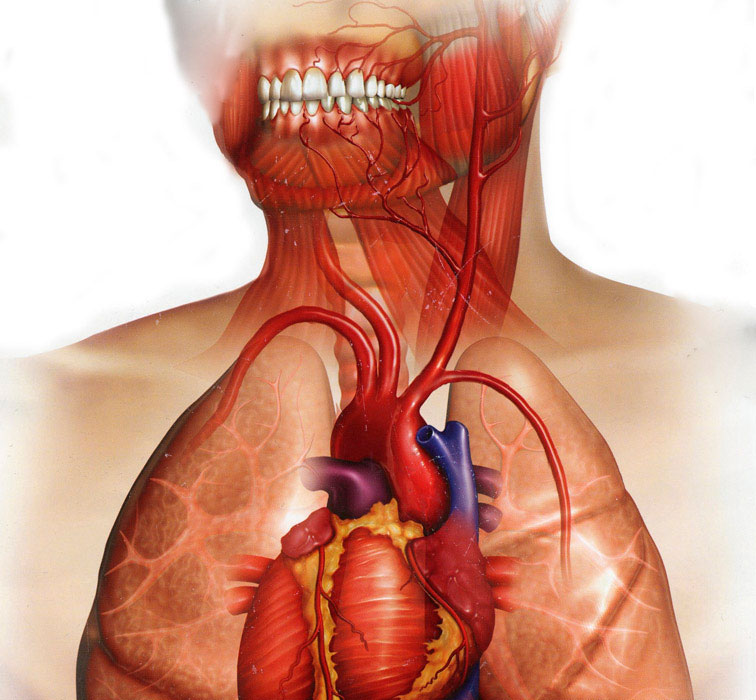
During the management of oral health ailments, tooth extraction, for example, it is important for the dentist to know the vital signs (body temperature, blood pressure, heart rate, and respiratory rate), whether the patient is suffering from any heart/ thyroid/ endocrine or other organs/ system disorders or not, whether the patient is under anticoagulant therapy (or other medications) or not. Removal of a tooth in a patient with uncontrolled diabetes or hypertension would lead to several complications. Management of oral and dental problems necessitates general health considerations. What medications are to be prescribed during the management of oral and dental problems are also modified depending upon the existing general health conditions. Some toothache is psychogenic, so that can’t be identified and managed without understanding the brain and its functioning. The bottom line, a dentist can not manage oral and dental health problems without knowing about the heart or the pancreas, or the brain.
There is vast literature emphasizing the relationship between oral health and general health. Oral health is not (and can not) be seen independent of general health but the caregivers of general health, in the majority of cases, are unconcerned about oral health. A dentist reviews the state of general health in a patient seeking help for gum disease but that is not reciprocated by a physician; a physician rarely reviews oral health status and refers to the dentist unless it’s a severe problem.
The Consequences
Limited co-operation and reciprocation by the medical doctors hinder the application of preventive treatment to susceptible individuals or to those patients who are in an early stage of dental disease. Half of the world’s population is plagued by tooth decay. The management of tooth decay is expensive and expenses increase as the disease progresses. Thus, it would be only wise to intercept the disease in its earlier stage; or even wiser to adopt preventive measures. But that would be more efficient if the medical doctors co-operate in the identification of oral health ailments and sound referral.
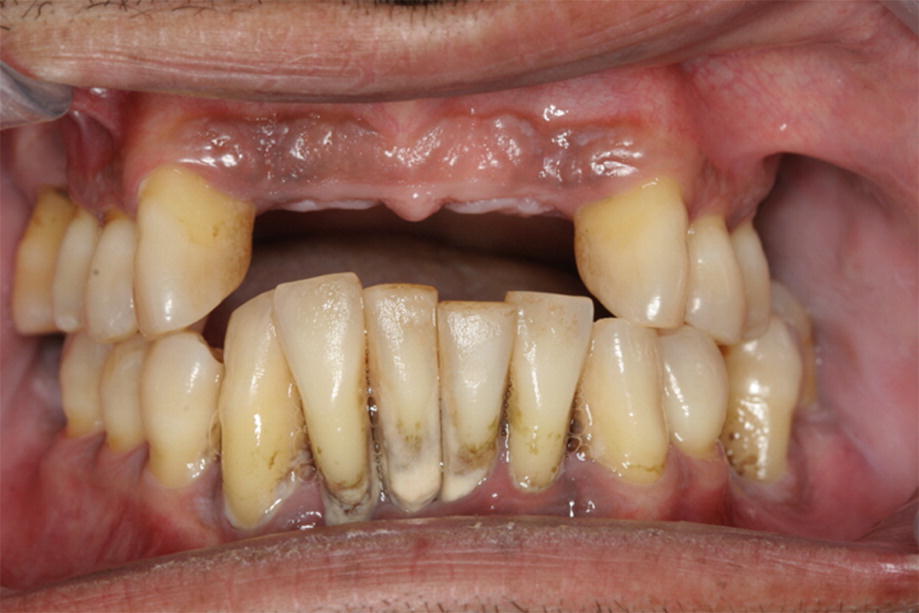
The consequences in developing countries are even worse. A patient with a loose tooth is sent for blood glucose tests by a dentist if s/he suspects diabetes and seeks physician advice if necessary thus helping in the identification of a general health disorder but a physician rarely advises a diabetic patient to get his oral health in right track by advising the patient to visit a dentist despite the fact that the mouth of a diabetic patient is prone to devastating consequences due to increased degree of bone loss in the tooth-supporting structures and increased chances of microbial growth. This is just an example. How could care provided by a physician excluding a whole mouth and jaws organ system (stomatognathic system) be called comprehensive or holistic?
More than 90% of all infections in the head and neck region can be traced back to an odontogenic origin (originating from the teeth). It has been observed that many patients suffering from abscess of the face due to tooth decay seek a general surgeon’s advice and a general surgeon may perform extraoral (from outside the mouth) incision and drainage (i.e. cutting open the wound and cleaning off the pus). This not only disfigures the person due to the scar of the extraoral approach but also the cause is not eliminated, for the cause of the abscess is the decayed tooth. The treatment could have been a root canal treatment or intraoral incision and drainage (cutting open the wound and cleaning off the pus from inside the mouth). The lack of a sound referral system may be rooted in the medical curriculum which does not incorporate enough dental curriculum necessary to identify and decide when to refer a case to a dentist.
The Need
In this age of specialty, the co-operation among the specialties is of utmost importance for the proper and holistic care of the patient. A dentist must know when to refer a case to a psychiatrist and a pediatrician must know when to refer a case to a dentist (or a pediatric dentist). But only this is not enough.
The government and the policymakers must build a robust health care system that is able to incorporate all sectors of medicine to provide holistic care to the people. Enough dentists must be employed by the government in primary health care set up and every hospital to meet the actual public need. The dentists must be equipped with necessary devices, instruments, and auxiliary dental manpower to deliver the service (goes unsaid).

The public and the policymakers many a time underestimate the skills and expertise required to deliver comprehensive dental care. The policymakers assume that the hygienists or the dental therapists would be sufficient to provide basic dental services in rural areas and that the dentists are trying to maintain an unnecessary hegemony over dentistry. Which is blatantly false. The dentists understand the complexity of the mouth and jaw system and express their concern regarding the propriety of dental care received by patients delivered by inadequately skilled personnel. The hygienists, for example, constitute an important part of the dental health care delivery system. In most South Asian countries, they are trained for 2/ 3 years after 10th grade to perform oral prophylaxis (or cleaning of the mouth) under the supervision of dentists. It would be an injustice to the common people and the hygienists to ask them to deliver something they are not trained in.
The co-operation among the specialties and incorporation of proper oral health care delivery system into the medical health care delivery system is the need of the present day.

Sefali
This is great and informative dai